
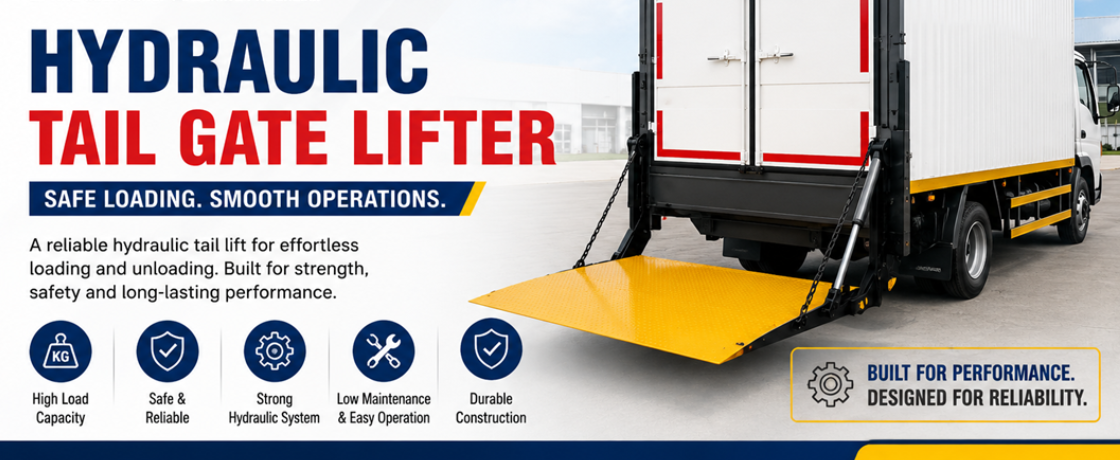
Jyoti Hydraulic manufactures practical hydraulic lifting solutions for commercial vehicles used in logistics, distribution, manufacturing and industrial transportation. A hydraulic tail lift allows heavy goods to be transferred safely between ground level and the vehicle’s loading floor. It reduces manual effort, speeds up deliveries and helps prevent damage during loading and unloading. For businesses searching for a reliable Hydraulic Tail Gate Lifter Manufacturer in India, choosing the correct capacity, platform design and installation method is essential for dependable long-term performance.
What Is a Hydraulic Tail Gate Lifter?
A Hydraulic Tail Gate Lifter is a powered loading platform fitted at the rear of a truck, van or other commercial vehicle. It uses hydraulic pressure to raise or lower goods between the road surface and the cargo deck.
The system generally consists of a fabricated platform, hydraulic cylinders, a power pack, control valves, mounting brackets and electrical controls. Once the load is positioned on the platform, the operator activates the control switch. The hydraulic system then lifts or lowers the platform in a smooth and controlled manner.
This equipment is particularly useful at delivery locations where forklifts, cranes or loading docks are not available.
Growing Use of Hydraulic Tail Lifts in India
Indian logistics operations are becoming faster and more organized. E-commerce deliveries, cold-chain transportation, retail distribution, industrial supply and warehouse movement require vehicles to complete more loading cycles in less time.
Traditional manual handling can slow down deliveries and increase the risk of injury, especially when goods are heavy, bulky or sensitive. Hydraulic tail lifts help fleet operators improve vehicle turnaround time while reducing their dependence on additional labour and external material-handling equipment.
They are commonly installed on delivery trucks, refrigerated vehicles, container bodies, municipal vehicles and specialized industrial transport vehicles.
Main Types of Hydraulic Tail Lifts
Cantilever Tail Lift
A cantilever lift has a large platform that opens from the rear of the vehicle. It provides stable lifting and is suitable for pallets, trolleys, crates and general cargo.
Tuck-Away Tail Lift
The platform folds and remains stored beneath the vehicle body. It is suitable for vehicles that frequently use loading bays and also require a tail lift at locations without dock facilities.
Column Tail Lift
The platform moves vertically along columns mounted at the rear of the vehicle. This design is often selected when a larger platform or a relatively straight lifting path is required.
Slider Tail Lift
A slider system retracts beneath the vehicle chassis when not in use. It keeps the rear entrance accessible and is useful for distribution vehicles with frequent loading requirements.
The right design depends on vehicle construction, available chassis space, cargo dimensions and loading frequency.
Technical Factors That Affect Performance
A tail lift should not be selected only by its advertised lifting capacity. The position of the load on the platform also matters. A heavy load placed near the outer edge creates greater stress than the same load positioned close to the vehicle.
Important technical considerations include:
- Rated lifting capacity and load centre
- Platform length, width and surface grip
- Vehicle floor height
- Chassis strength and available mounting space
- Hydraulic cylinder and power-pack capacity
- Electrical supply and battery condition
- Platform self-weight
- Safety locks and emergency lowering arrangement
- Corrosion protection
- Number of operating cycles per day
A professional manufacturer should evaluate both the vehicle and the application before recommending a configuration.
Applications
Hydraulic tail gate lifters are used in:
- Logistics and parcel delivery
- FMCG distribution
- Pharmaceutical transportation
- Food and beverage supply
- Cold-chain vehicles
- Furniture and appliance delivery
- Industrial machinery movement
- Retail and warehouse distribution
- Gas cylinder and drum handling
- Hospital and medical equipment transport
They are especially valuable when goods are moved using pallets, roll cages, drums or wheeled trolleys.
Benefits of Installing a Hydraulic Tail Lift
The main advantage is safer cargo movement. Operators do not need to manually lift heavy goods from the ground to the truck floor. This reduces physical strain and the possibility of accidental drops.
A properly selected hydraulic tail lift can also:
- Reduce loading and unloading time
- Minimize cargo damage
- Lower labour requirements
- Improve vehicle productivity
- Support deliveries at locations without loading docks
- Provide controlled movement of fragile or expensive goods
- Improve overall workplace safety
For businesses completing multiple deliveries every day, these improvements can produce meaningful operational savings.
Hydraulic Tail Lift Price in India
The price of a hydraulic tail lift varies according to its design and technical requirements. There is no single price suitable for every vehicle.
Quotation value is generally influenced by:
- Required lifting capacity
- Platform dimensions
- Type of tail lift
- Vehicle make and body design
- Hydraulic and electrical specifications
- Installation complexity
- Safety features
- Material and surface coating
- Custom fabrication requirements
Buyers should compare total value rather than selecting the lowest quotation. Poor-quality cylinders, weak mounting structures or unsuitable platforms may result in frequent repairs, unsafe operation and vehicle downtime.
How to Choose the Right Manufacturer
Before placing an order, share accurate information about the vehicle and load. This should include the maximum cargo weight, load dimensions, vehicle floor height, chassis details and estimated daily operating cycles.
A dependable Hydraulic Tail Gate Lifter Manufacturer in India should provide:
- Application-based capacity selection
- Vehicle compatibility assessment
- Strong platform and mounting design
- Quality hydraulic components
- Safe and accessible controls
- Installation support
- Spare-part availability
- Maintenance guidance
- After-sales technical assistance
The manufacturer should also explain safe load positioning and operating limitations clearly.
Maintenance and Safe Operation
Regular inspection helps prevent sudden failure. Operators should check hydraulic hoses, oil leakage, pins, platform hinges, wiring, control switches and safety locks. Moving joints should be lubricated at recommended intervals.
The platform must never be loaded beyond its rated capacity. Cargo should be positioned according to the specified load centre and secured against rolling or sliding. Only trained personnel should operate the lift.
Future of Vehicle-Mounted Lifting Systems
Hydraulic tail lifts are becoming more efficient and easier to monitor. Future systems are expected to include improved load sensors, remote diagnostics, cycle monitoring and energy-efficient power packs. Lightweight high-strength materials may also help reduce platform weight without compromising structural strength.
As Indian delivery and distribution networks expand, demand for dependable vehicle-mounted lifting equipment is likely to grow across multiple industries.
Conclusion
A hydraulic tail lift can make commercial vehicle operations safer, faster and less dependent on manual labour. However, performance depends on correct capacity selection, vehicle-compatible installation and regular maintenance.
Jyoti Hydraulic provides application-focused hydraulic lifting solutions for different commercial and industrial vehicles. By understanding the cargo, vehicle structure and loading conditions, businesses can select a tail lift that delivers reliable service and better operational value.
Frequently Asked Questions
What is a Hydraulic Tail Gate Lifter used for?
It is used to lift or lower goods between ground level and the loading floor of a commercial vehicle.
Which tail lift type is best for delivery trucks?
Cantilever, tuck-away and slider models are commonly used. The right choice depends on vehicle design, cargo type and available chassis space.
How is the correct lifting capacity selected?
Capacity should be selected according to maximum cargo weight, load centre, platform size and daily usage. A safety margin should also be considered.
Can a hydraulic tail lift be customized?
Yes. Capacity, platform dimensions, mounting design and controls can be customized according to the vehicle and application.
What affects hydraulic tail lift price?
Price depends on capacity, lift type, platform size, hydraulic components, safety features, vehicle modification and installation requirements.
Does a tail lift reduce labour requirements?
Yes. It allows one or two trained operators to handle goods that may otherwise require several workers or external lifting equipment.
Is regular maintenance necessary?
Yes. Hydraulic oil, hoses, cylinders, wiring, pins, joints and safety locks should be inspected regularly.
Request a Quotation
Need a dependable Hydraulic Tail Gate Lifter for your commercial vehicle? Contact Jyoti Hydraulic for product selection, technical consultation and a quotation based on your vehicle and load-handling requirements.
📞 +91 9541424317
Speak with our experts to discuss lifting capacity, platform size, vehicle compatibility and customized installation requirements.


